
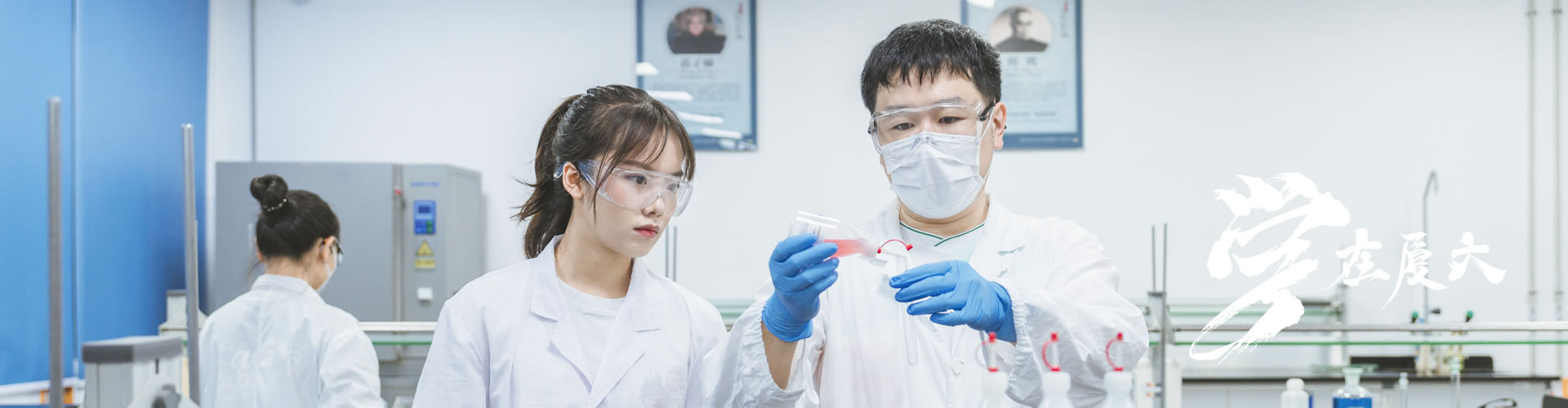
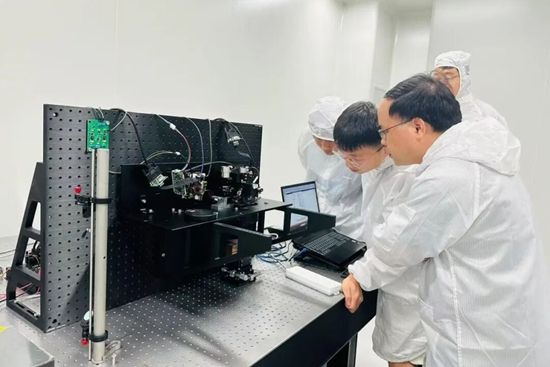
Professor Zhou Wei's team conducts experiments. [Photo/en.xmu.edu.cn]
China's hydrogen energy sector has been advancing commercial applications in heavy-duty vehicles over the past few years. Yet key challenges in production efficiency, supply stability, storage safety, and localization of key components remain.
A research team led by Professor Zhou Wei at the Pen-Tung Sah Institute of Micro-Nano Science and Technology at Xiamen University has spent more than a decade addressing such bottlenecks.
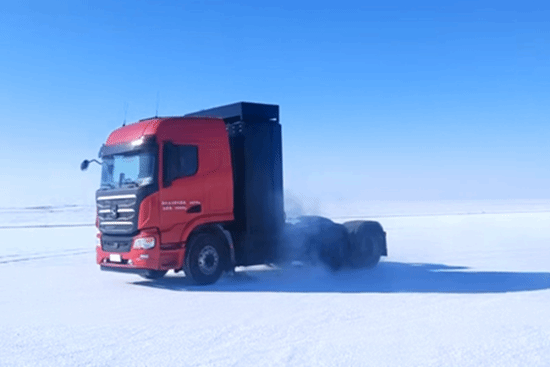
The research team's achievements. [Photo/en.xmu.edu.cn]
Traditional hydrogen fuel cell heavy-duty trucks often experience power fluctuations under varying driving conditions due to limited coordination between lithium and hydrogen power systems, resulting in high hydrogen consumption.
To address this, the team designed an adjustable lobe-needle ejector and a pioneering control-and-feedback mechanism based on hydrogen pressure differentials and current variations, which reduces energy loss in the hydrogen supply system to below one percent.
Another major challenge is insufficient powertrain efficiency, which can make operating costs comparable to or even higher than those of diesel trucks. To this end, the team created an integrated hydrogen-electric hybrid energy management system that enables centralized, highly efficient control of both power sources, reducing hydrogen consumption to 7.04 kilograms per 100 kilometers.
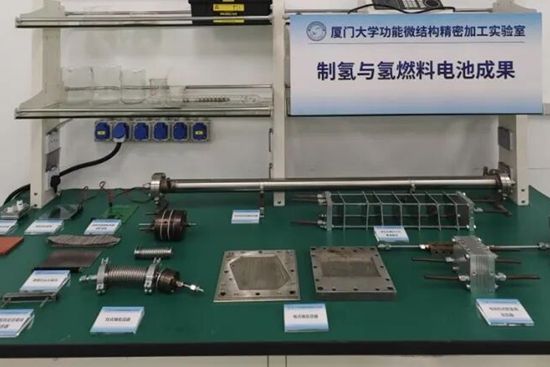
Hydrogen fuel cell heavy-duty trucks must withstand extreme conditions. [Photo/en.xmu.edu.cn]
Scaling up hydrogen fuel cell heavy-duty trucks also requires strong performance in extreme environments. To achieve this, the team introduced a multi-step rapid cold-start method and developed an advanced water-thermal management system. Combined with intelligent control algorithms and adaptive thermal strategies for cold climates, these innovations enable reliable systems to start at -35 C within 140 seconds and ensure effective heat dissipation for high-power fuel cell stacks.