

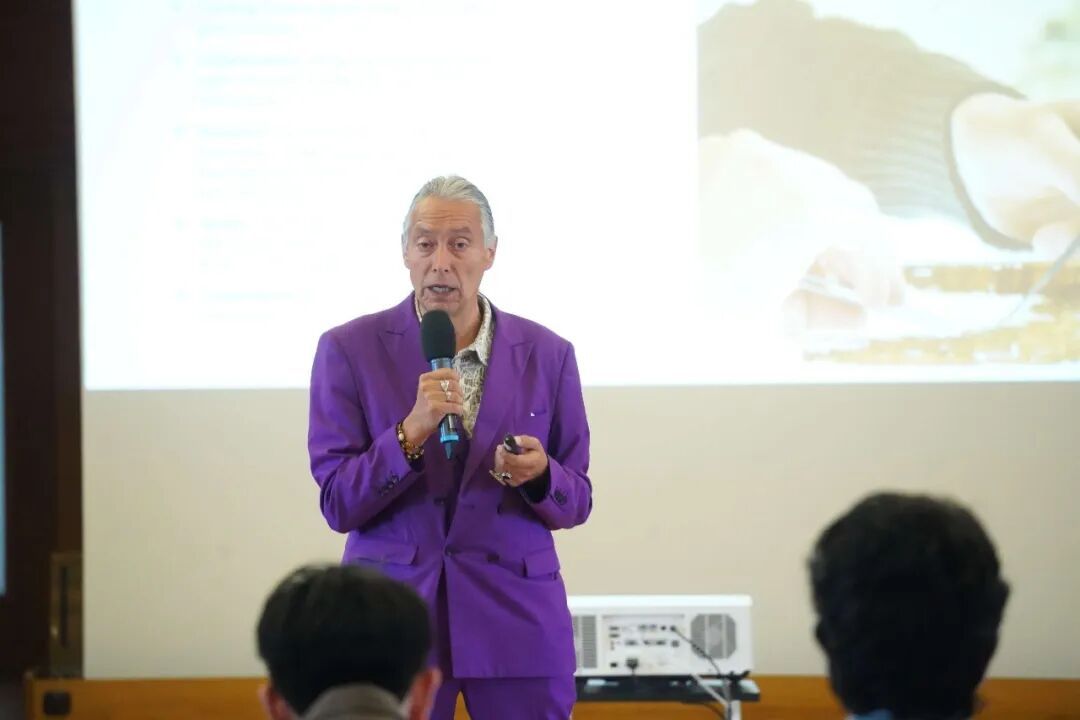
Ottmar Ette, chairman of the Prussia-Berlin Center, shares his vision for connecting cultures, archives, and knowledge systems. [Photo/en.xmu.edu.cn]
An international symposium on cultural heritage and intercultural exchange was held on July 7 in Berlin, Germany, bringing together scholars from China, Germany, Brazil, Poland, and other countries to discuss new approaches to heritage research and international cooperation.
The symposium, focused on shared cultural heritage as a bridge for cultural dialogue, was organized by the Prussia-Berlin Center at the Berlin-Brandenburg Academy of Sciences and Humanities and the Center for Exchanges and Mutual Learning among Civilizations (EMLAC) at Xiamen University.
Participants discussed topics including cultural heritage, exchanges and mutual learning among civilizations, digital humanities and cross-cultural knowledge production, and explored ways to strengthen collaboration in heritage studies amid globalization.
Ottmar Ette, chairman of the Prussia-Berlin Center, said in his opening remarks that the historical depth of exchanges between Chinese and German civilizations was reflected in figures such as Gottfried Wilhelm Leibniz, whose writings included reflections on China, and Alexander von Humboldt, who conducted long-term research related to China. He said heritage research should not only look back at history but also focus on the future by promoting international cooperation and dialogue among civilizations.
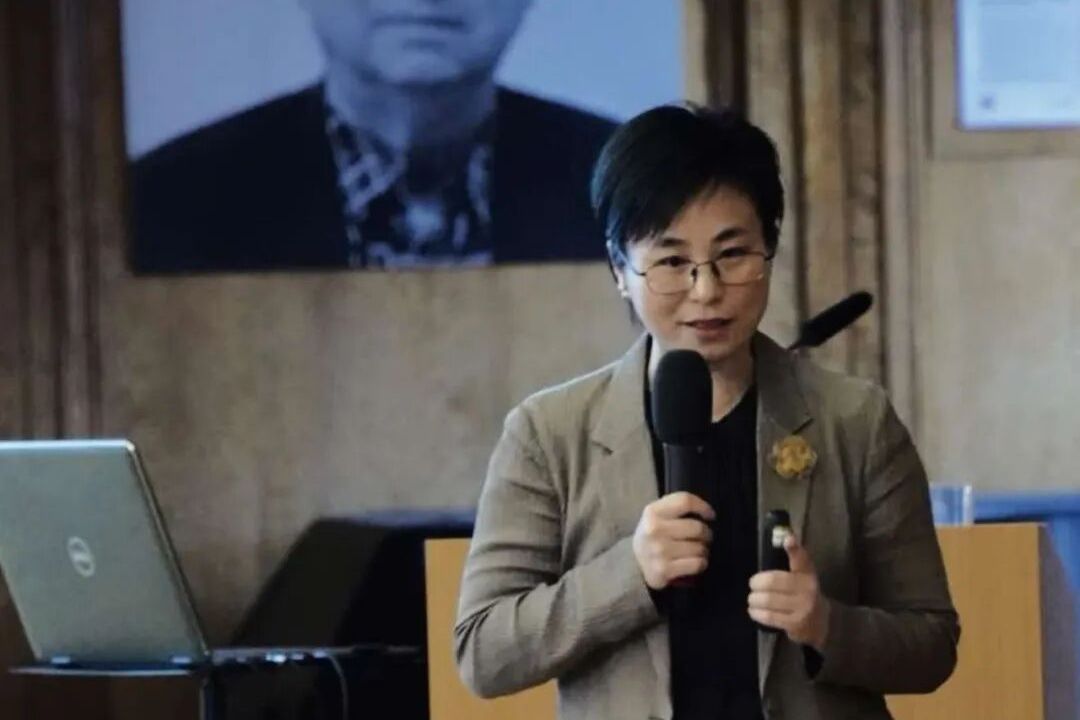
Liu Yue, director of EMLAC at Xiamen University, highlights the role of cross-cultural memory in heritage preservation through historical images and architectural records. [Photo/en.xmu.edu.cn]
Liu Yue, director of EMLAC at Xiamen University, said preserving shared cultural heritage is essential to promoting mutual learning among civilizations. She called for efforts to activate shared memories and strengthen their humanistic value through China-Germany cooperation.
The symposium served as a prelude to an international conference to be held at Xiamen University in September 2026, which will focus on art, culture, heritage, and memory, and the role of objects and spaces in shaping memory across Asia and Europe. It was also the first academic event held under the framework of the China-Europe Network for Civilizations Studies (CENCS), which was established on July 2 in Rome, Italy.